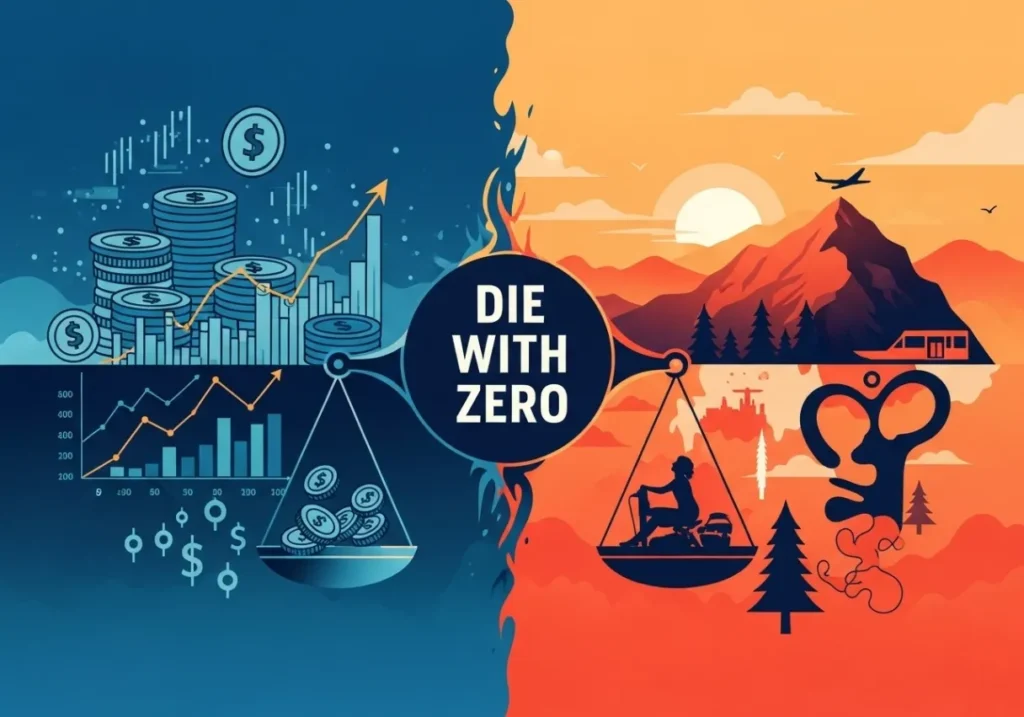
Your Life is a Story, Not a Bank Account
A Simple Guide to the Amazing Idea in the Book “Die With Zero”
Imagine your life is like a big, empty storybook. Every day, you get to add a new page. What kind of story do you want to write? A story about sitting at a desk and counting coins, or a story filled with amazing adventures, happy memories, and fun times with people you love?
Most of us are taught to fill up a giant piggy bank for when we are old. We work hard, save our money, and wait for “someday” to finally have fun. But a man named Bill Perkins wrote a book called Die With Zero with a different, more exciting idea. He asks: **What if the goal of life isn’t to be rich when you die, but to live the richest life possible right now?**
This isn’t about throwing your money away. It’s about being smart and using your money to write the best life story you can, page by page, before you run out of pages to write.
Part 1: The Big Secret: Money is More Fun When You’re Young
Think about this: When you go to work, you are trading your time for money. Your time is the most precious thing you have! You can always get more money, but you can never get more time.
Now, imagine someone gives you $1,000 to go on a fantastic hiking trip. Would that trip be more fun when you’re 25, full of energy and ready to climb a mountain? Or when you’re 85 and your body is tired?
Of course, it’s more fun when you’re young! The “fun-value” of money goes down as you get older. This book’s big idea is that we should use our money for amazing experiences when we have the health and energy to enjoy them the most.
The Main Idea in a Nutshell
Don’t just save money for an old person you might become. Use it to create happy memories that you can enjoy for the rest of your life.
Part 2: Fun Rules for a Happier Life Story
So, how do we do this? The book gives us some simple rules, like a treasure map for a happy life.
Rule #1: Collect Memory Treasures, Not Just Money
When you go on a fun trip or learn something new, you get a “Memory Treasure.” It’s a happy memory that you can think about forever. It makes you smile, and you can share the story with friends. These treasures make your life rich! Unlike money, the value of a good memory grows over time. The fun trip you took at 20 is still a great story to tell when you’re 60.
Rule #2: Plan Your Adventures on a Timeline
Don’t just say “I’ll do it someday.” Get a piece of paper and write down the big chapters of your life: Your 20s, 30s, 40s, and so on. Then, write down the adventures that are perfect for each chapter!
- In your 20s: Maybe it’s backpacking, going to music festivals, or trying a scary roller coaster. High-energy fun!
- In your 40s: Maybe it’s taking your family to see the Grand Canyon or learning to cook amazing food.
- In your 60s: Maybe it’s a relaxing cruise or spending lots of time teaching your grandkids a skill you love.
This way, you make sure to do the fun things before it’s too late.
Rule #3: Give the Best Gifts While You’re Around to See the Smiles
Why wait until you’re gone to give presents to the people you love? A gift of money can be much more helpful to your kids when they are trying to buy their first home in their 30s than when they are already 60 and have plenty of their own. Give gifts when they matter most, and you get to see the joy it brings!
Part 3: “But What If…?” (Answering the Worries)
“But what if I run out of money when I’m old?”
This is a good question! The book isn’t telling you to be careless. It’s about being smart. Think of your money in two jars:
- The “Needs” Jar: This is for everything you need to live comfortably and safely, like your house, food, and healthcare. You make sure this jar is always full enough for your whole life. You never touch this for fun.
- The “Adventures” Jar: This is the money left over. This is the money you are supposed to spend on creating your Memory Treasures! The goal is to empty this jar by the end of your life.
It’s about planning carefully so you can have fun without ever having to worry.
“Isn’t it selfish to spend all my money on myself?”
Not at all! A life full of experiences makes you a more interesting, happy, and generous person. And remember Rule #3? You’re sharing your money and your joy with others along the way. The best legacy you can leave is not a pile of cash, but a collection of wonderful memories that you created *with* the people you love.
Part 4: Your Turn! Start Your Adventure Today
You don’t have to change everything overnight. You can start small!
- Make a “Dream List”: Write down all the fun things you want to do, see, or learn in your life. No dream is too big or too small!
- Pick One Small Thing: Choose one thing from your list that you can do soon. Maybe it’s visiting a new park, trying a new type of food, or buying a ticket to a concert.
- Do It!: Go and have that experience. See how it feels to turn a little bit of money into a brand new Memory Treasure.
Conclusion: Write a Story Worth Reading
At the end of your life, you won’t be wishing you had worked more hours or saved one more dollar. You’ll be looking back through the pages of your life’s storybook.
The message of Die With Zero is simple and beautiful: Make sure your story is one you’d be excited to read. Fill it with joy, love, and adventure. Because a life rich with memories is the richest life of all.


I don’t think the title of your article matches the content lol. Just kidding, mainly because I had some doubts after reading the article.
Thank you for your sharing. I am worried that I lack creative ideas. It is your article that makes me full of hope. Thank you. But, I have a question, can you help me?