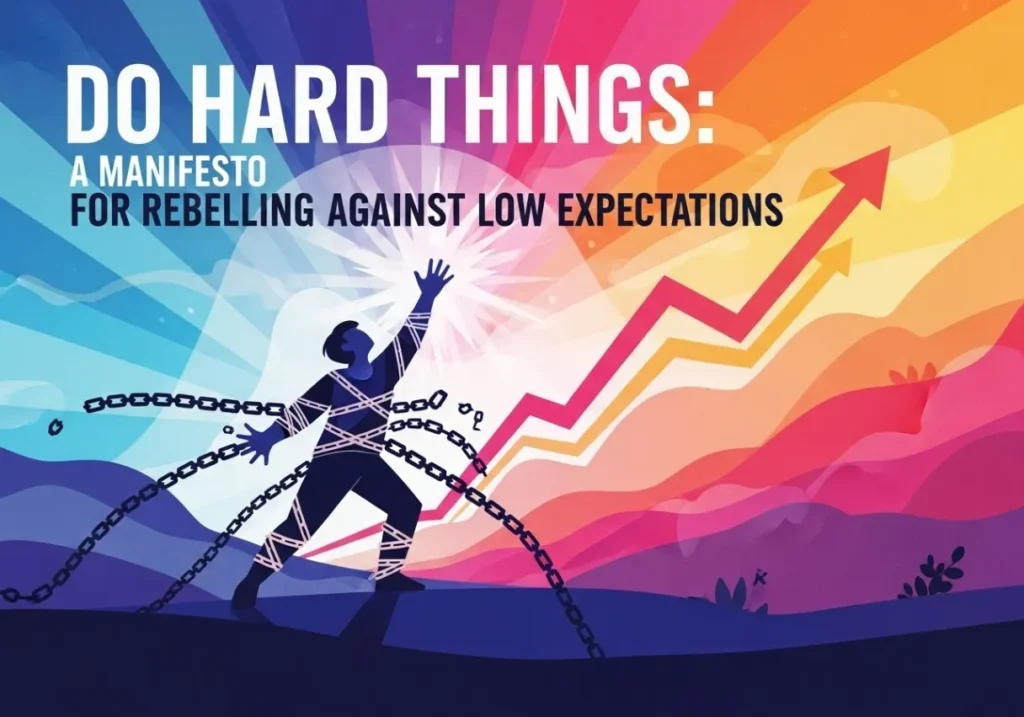
Do Hard Things
Society has lied to you.
The world tells teenagers and young adults: “Just take it easy. Play video games. Stay out of trouble. You can do real work when you are 30.”
This is the Myth of Adolescence. It is the idea that the years between 13 and 25 are a “vacation from responsibility.”
Alex and Brett Harris wrote Do Hard Things to smash this myth. They argue that youth is not a waiting room; it is a launchpad. George Washington became a surveyor at 16. Joan of Arc led armies at 17. You are capable of massive impact right now.
This Ultimate 2025 Guide is a call to arms. It is time to stop acting like a child and start building your legacy.
Part 1: The Myth of Adolescence
“Adolescence” is a modern invention. For most of history, you were a child, and then you were an adult.
The Low Bar
Society sets the bar incredibly low. If a 16-year-old doesn’t do drugs and gets C-grades, we say “Good job!”
Because the bar is low, we don’t jump. We shuffle. We atrophy. We waste our most energetic years consuming content instead of creating value.
The Rebelution
The authors coined the term “Rebelution” (Rebellion + Revolution). It means rebelling not against authority, but against mediocrity.
It is refusing to be defined by what culture expects of you. It is choosing to be excellent when everyone else is being average.
Part 2: The “Kidult” Trap
Because we treat teens like children, they act like children well into their 20s. We now have 28-year-old “Kidults” who still need their parents to make dentist appointments.
The Danger: If you don’t practice responsibility when the stakes are low (in your teens), you will be crushed by responsibility when the stakes are high (in adulthood).
2025 Reality Check:
Look at the Gen Z founders building AI startups at 19. They rejected the “wait your turn” narrative. While others were playing Fortnite, they were building the future. Which side of history do you want to be on?
The 5 Kinds of Hard Things
Doing hard things isn’t just about lifting weights. The Harris brothers categorize “Hard” into five specific zones.
1. Outside Comfort Zone
Doing things that make you awkward or nervous. (e.g., Public speaking, learning a hard skill).
2. Beyond Expected
Doing more than the minimum. Getting an ‘A’ is expected. Tutoring the class is going beyond.
3. Too Big Alone
Taking on projects that require a team. Collaboration forces maturity.
4. No Immediate Payoff
Doing the right thing even if the reward is years away. (e.g., Saving money, building character).
5. Against the Crowd
Standing up for your values when everyone else is drifting downstream.
Part 4: Comfort Zone vs. Growth Zone
Your Comfort Zone is a beautiful place, but nothing ever grows there.
The 3 Zones
- Comfort Zone: Easy, safe, stagnant.
- Growth Zone: Hard, scary, transformative. (This is where “Hard Things” happen).
- Panic Zone: Too hard, damaging. Avoid this.
Step Out Today
You don’t need to move a mountain. You just need to step one inch outside your comfort zone.
If you are shy, say hello to one stranger. If you are lazy, run for 5 minutes. Expansion happens at the edges.
Part 5: Small Hard Things
You don’t start by solving world hunger. You start by making your bed.
Faithfulness in the little things creates capacity for the big things. If you cannot be trusted to show up on time for a minimum wage job, you cannot be trusted to run a corporation.
The “Dishes” Test:
Doing the hard thing means washing the dishes before your mom asks you to. It means finishing your homework on Friday night so your weekend is free. It is choosing discipline over procrastination.
Conclusion: Start the Rebelution
This book is not about making life miserable. It is about making life meaningful.
The satisfaction of doing something difficult and succeeding is infinitely greater than the pleasure of watching Netflix for 6 hours. Do not waste your youth. Use it.
Your Challenge:
- 🔥 Pick One Hard Thing: Identify one task you’ve been avoiding.
- 🚀 Do It Today: Not tomorrow. Right now.
- 📈 Repeat: Build the muscle of competence.
Excellence is a choice. Choose it.